Author: Andrew Hunter Murray
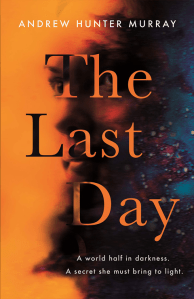
First Published: 2021
Cause: The world stops spinning and enters a tidally locked orbit.
TL;DR
A political thriller set in a post-apocalyptic world where the Earth doesn’t spin and the UK is in a permanent daytime. The survives of the Stop live under a power crazed prime minister who uses the police force as his private security. Is everything the public is being told true, though?
What It’s About
Andrew Hunter Murray’s The Last Day drops us onto a future Earth that’s literally stopped turning — one half scorched, the other frozen, with Britain clinging to the thin grey band of survivable twilight. Into this brittle equilibrium steps Ellen Hopper, a scientist summoned back from exile to unravel the dying secrets of a former Prime Minister. What begins as a reluctant homecoming turns into a slow, unnerving excavation of a government built on curated truths, weaponised nationalism, and the quiet terror of a world running out of options. Murray isn’t chasing spectacle; he’s charting the politics of a planet in stasis, and the people who’ll do anything to keep it that way.
Review
The concept of Andrew Hunter Murray’s ‘The Last Day’ is incredibly interesting. How would we cope if the spinning of the Earth slowed so much that it was as if the planet had stopped spinning? Scientists breaking the news to politicians and their attempt to control it. The panic of the general population as the news leaks. In the book, this period is called the Slow, and it is followed by the Stop. The realisation that one part of the globe would always be in sunlight while the rest of the world would be in a forever darkness. The book opens up the possibility of looking at how humanity would plan and decide who would survive this catastrophe. To look at human interaction with the moon and harvest. How animals would deal with this strange new planet.
That could all be looked at, but it isn’t.
More of that later, though. What the book does well is creating a believable post-apocalyptic world. London sits on the edge of chaos, but still partly surviving under a brutal police presence. Buildings are collapsing from lack of maintenance, but the government still keeps certain buildings in good nick. Some prestige projects are still being planned. Rumours fly around that the Tube is still being used by the government, despite strong evidence it has been flooded. Mostly, people are sat in their homes hoping for some improvements. They cope with small rations and try to keep their loved ones alive. The book handles this well.
One of my main issues with the book is that everything interesting happens off-page. Through long expository passages, where info-dumps are heavily dropped, we get glimpses of how humankind handled the Slow and Stop, but we don’t get the panic or the eventual acceptance. Instead, we get left with the character Doctor Ellen Hopper. A woman who moved to an offshore rig to avoid dealing with people. She has a failed marriage and a brother who has no interest in her. As a scientist, she lacks the ability to understand patterns and avoid repeating bad decisions. However, she does have the ability to walk across London at a speed Hackney cabs would be jealous of.
None of the characters we meet through Hopper particularly like her, and there’s no attempt to create a story arc that makes the reader like her. Despite the narrative that the UK was a Mecca for immigrants from the dark side of Earth, Hopper barely meets any. The most interesting character is the dictator British prime minister, General Richard Davenport, who – unsurprisingly – remains off-page.
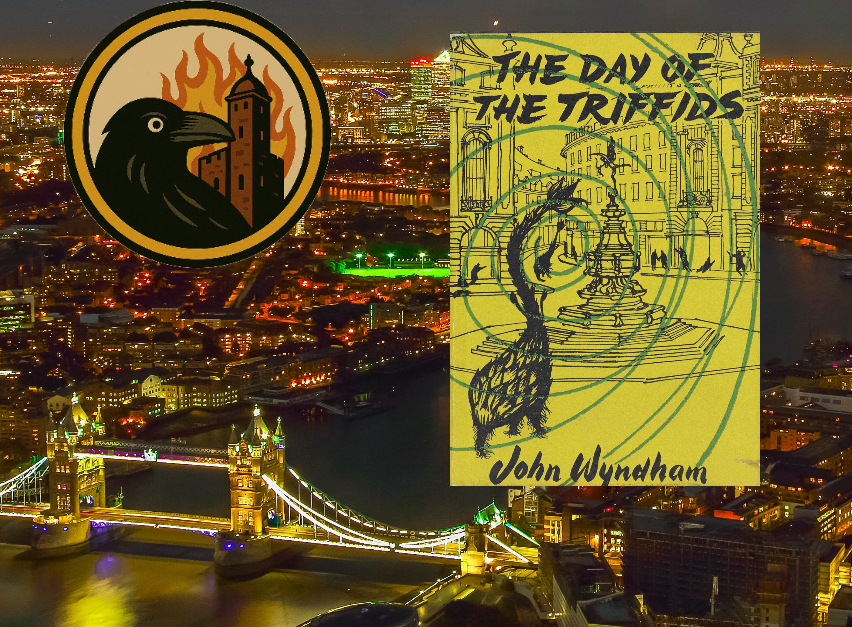
There’s an attempt to look at tough decisions in tough times, but ‘Day of the Triffids’ and ‘The Death of Grass’ handle this topic better. This book assumes people will hold the same standards as resources dry up and a battle of survival is ensuing.
A book with an amazing concept, but uninteresting characters leaves too much off-page. A lot of unanswered questions were probably going to be answered in a sequel, but that never got written.
Who This Book Is For
- Readers who love a big, irresistible concept, even if the execution doesn’t fully chase it
- Fans of quiet, atmospheric dystopias rather than action‑heavy apocalypses.
- Anyone who enjoys political tension, ration‑book survival, and crumbling‑Britain aesthetics.
- Readers who don’t mind off‑page world-building and are patient with exposition
- People who can tolerate a distant, difficult protagonist if the setting is strong enough.
- Those curious about what a stopped‑spinning Earth might look like, even if the science stays in the wings
Verdict Box
High Concept: Exceptional
Execution: Patchy
Characters: Underpowered
World Building: Convincing, if frustratingly off‑page
Pace: Slow, with long detours into exposition
Overall: A brilliant idea trapped inside a novel that never quite commits to exploring it
Final Thought
The Last Day has the bones of a great speculative novel – a world‑altering event, a society reshaped by fear, and a political machine desperate to control the narrative. But too much of the drama happens elsewhere, leaving us with a protagonist who never earns our investment and a story that gestures at big ideas without stepping into them. It’s a book you want to love for what it could have been, rather than what it ultimately is.


 Ravens Watch
Leave a comment