
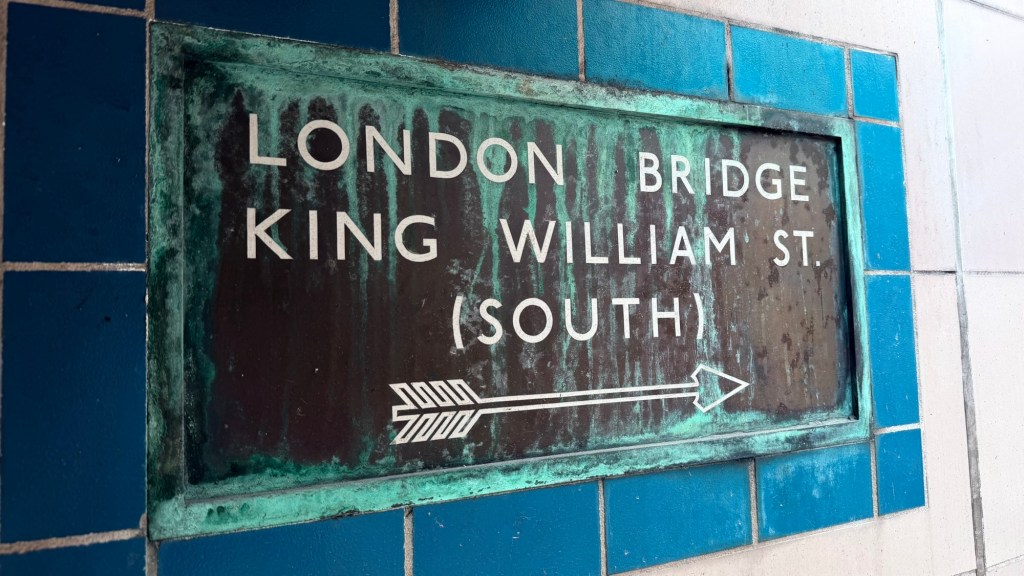
Why Do You Still Sing London Bridge Is Falling Down?
Has the destruction of any other structure in the world been sung about for so long? Has a rhyme born in one city travelled the globe by word of mouth and survived as long? Even today we still teach it to our children.
We live in an age that creates global trends in an instant, but how many of them will still be spoken of in the year 2326? Will anyone remember Baby Shark, Gangnam Style, or Hello? Probably not. Yet that is the span of time people have been singing about London Bridge falling down.
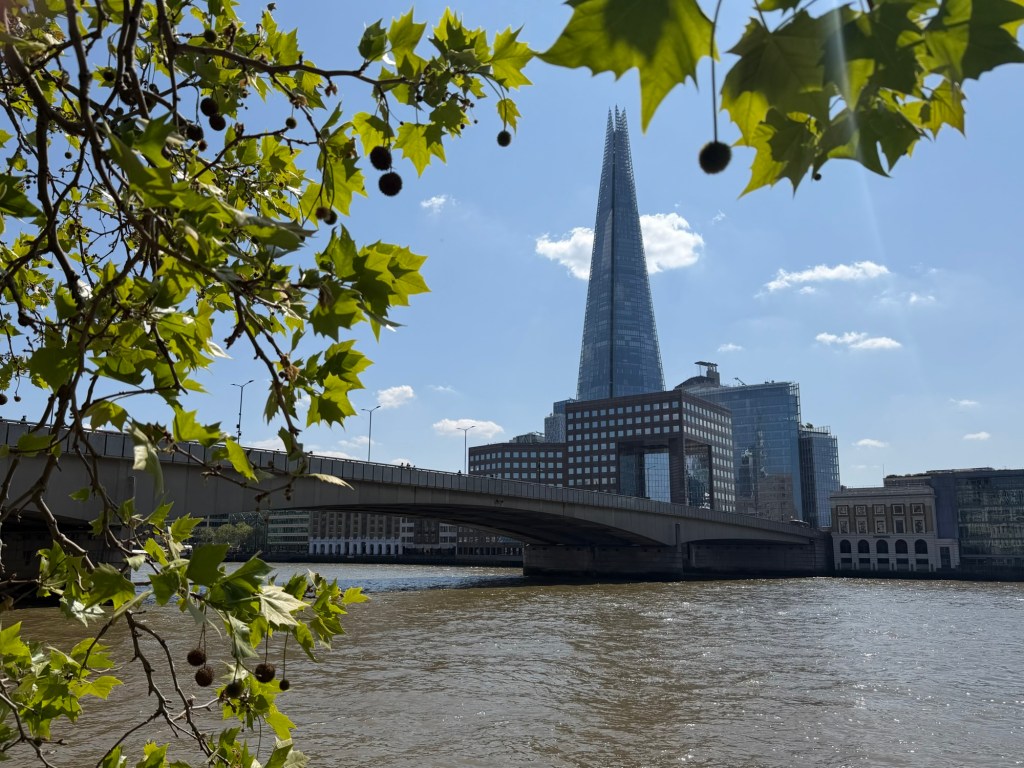
London Builds Myths
A small verse, with so many origin stories and no single known truth, still reverberates through our culture long after the bridge it names has been rebuilt, replaced, and reborn.
To explore this properly, we return to the key question: why London?
Some may point to France’s Sur le pont d’Avignon or other songs from elsewhere, but none has the same global recognition. Part of the power of London Bridge is Falling Down lies in the mystery that surrounds its origin. London has always excelled at turning history into legend. The city sits between the old and the new worlds. A metropolis that knows never to keep still. London excels in creating lore. Search for the meaning behind the rhyme and you quickly find a dozen possibilities: Viking raids, human sacrifice, forgotten queens. The city never confirms or denies any of them. It simply lets the stories accumulate like silt on the Thames.
The Bridge Guarded by a Battleship & a Dragon
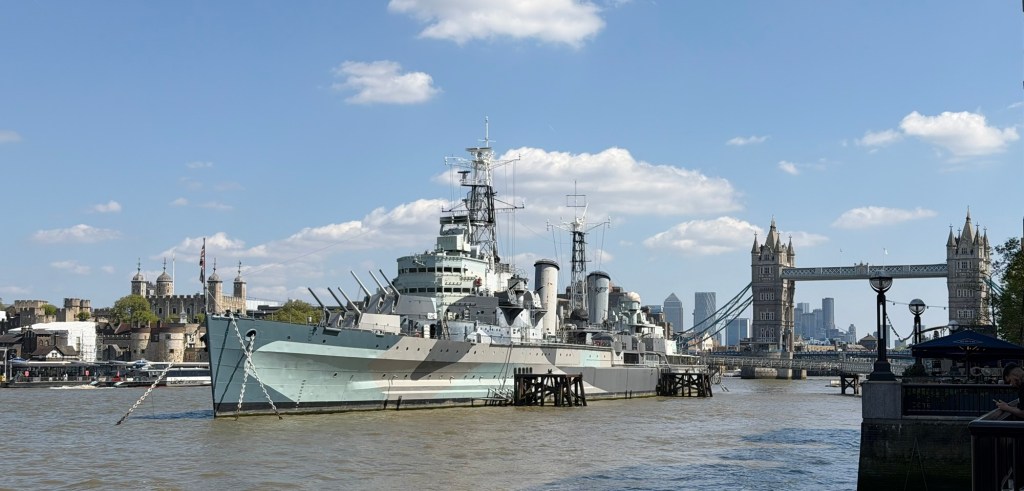
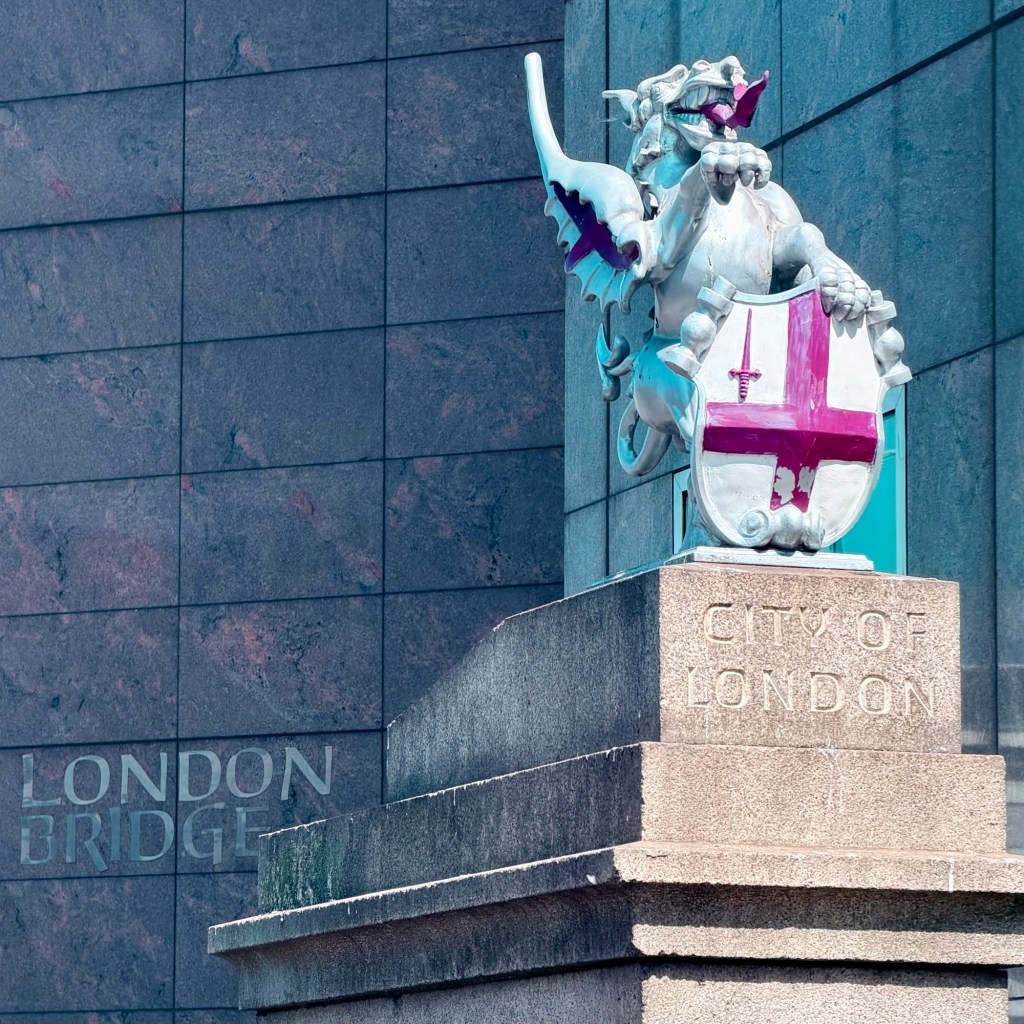
Even now there’s a mystery to London Bridge. People confuse it with Tower Bridge and question whether the American knew which crossing he was buying for Arizona. And then there’s HMS Belfast – a full‑sized wartime battleship moored casually between the two bridges, as if London decided the Thames needed a reminder that history doesn’t stay in museums. While HMS Belfast guards the riverside, on the south side of the bridge stands a dragon – one of the guardians of the old City boundary – overseeing commuters as they cross its ancient borders.
London Bridge as a Threshold Between Worlds
People think of London as a blend of tradition and modernity, a city that has survived through time and still stands firm. London is a port city on the banks of time. The river of history pushing on London Bridge, but never pushes it down.
Not just water, either, but fire. The Great Fire of 1666 began not far from the bridge, and the bridge that stood then was a very different creature – crowded, crooked, almost medieval. More like the Ponte Vecchio in Florence than the dull grey concrete crossing we know today. The flames licked at it, tested it, threatened to claim it. But London Bridge did not burn down.
And then there is the bridge’s appearance in one of the most important English‑language poems of the 20th century. In T. S. Eliot’s The Waste Land, London Bridge becomes a threshold – a place where the living and the dead move side by side, echoing Dante’s Inferno as the crowds pour across it into the underworld, or what we now call the City of London.
“Unreal City,
Under the brown fog of a winter dawn,
A crowd flowed over London Bridge, so many,
I had not thought death had undone so many.”The Waste Land by T. S. Eliot
For all the talk of collapse, the rhyme has survived because it isn’t really about destruction at all. It’s about endurance. London Bridge has been rebuilt so many times that it has become a symbol of something cities rarely admit openly: survival is not a straight line. Things fall, things change, things rise again.
That’s why the rhyme travelled so far and lasted so long. It carries the same truth that draws people to post‑apocalyptic stories today – not despair, but the reassurance that humanity continues. That we rebuild. That we adapt. That the world can break and still be lived in.
London Bridge is falling down, and standing up, and falling again, and still the city goes on. Bridges are always about a journey. People do not go to bridges, they cross bridges; just as London Bridge crosses time. The rhyme endures because it understands what London understands: the future isn’t guaranteed, but humanity will fight to be here. Survival is a rhythm. A cycle. A promise.
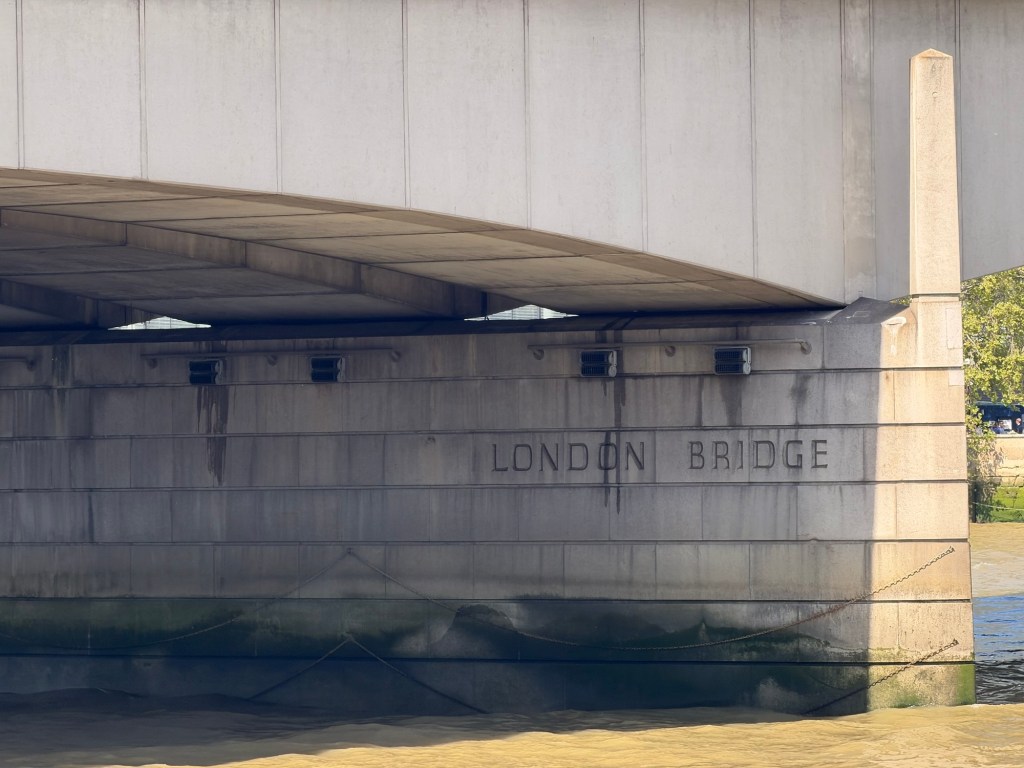
All photographs in this post were taken by the site’s owner.


Leave a Reply