
Stripped of exotic travel and glamour, Moonraker becomes a tightly focused character study of James Bond on home soil – a story of loyalty, suspicion, and a nuclear threat hiding in plain sight. This review looks at how Fleming uses London’s everyday spaces to build one of his most unsettling early novels.
Author: Ian Fleming
Published: 1955
Cause: A super atomic rocket
Chapter One Opening Sentence: The two thirty-eights roared simultaneously.
TL;DR
Moonraker is a tight, grounded Bond thriller set in 1950s Britain, where the danger aimed at London is unseen and unspoken. Fleming swaps glamour for grit: Cold‑War tension, V‑2 memories, and a villain hiding in plain sight.
What It’s About
Moonraker follows Bond as he’s asked to look into a small irregularity involving Sir Hugo Drax, a national hero funding Britain’s new defence rocket. What begins as a favour turns into a tense investigation set entirely in 1950s Britain – a world of rationing, Cold‑War nerves, and lingering V‑2 memories. Beneath the surface respectability, something is wrong, and Bond’s job is simply to notice it. The novel is about an unseen threat hiding in plain sight and the hard work required to stop it.
Review
Why It Belongs
Some readers may argue that the story of Moonraker doesn’t belong on RavensWatch. I would argue those readers are mistaken. Fleming’s third Bond novel occupies a rare place in the canon: a story where London itself is the target, a city going about its ordinary week while never realising how close it comes to catastrophe.
It also sits comfortably alongside other London‑danger stories in the RavensWatch canon – including The Adventure of the Bruce‑Partington Plans, where Holmes confronts an espionage threat that could quietly compromise Britain’s defence. Both tales reveal the same truth: London’s greatest dangers often unfold in silence, in offices, envelopes, and shadows, long before the city ever knows it is at risk.
London’s Hidden Threats
Most of the works on this site explore how Londoners endure disaster – the crowds, the chaos, the visible scars. Moonraker belongs to a different category: the unseen danger, the threat that passes over the capital without ever touching the ground. It’s the same logic that powered the BBC’s Spooks (MI‑5), where a “gas explosion” was the polite fiction masking something far darker. London is full of these almost‑stories, the ones that never make the papers, the ones that vanish into the river fog before anyone knows they existed.
Bond’s Quiet Role
Fleming lets us glimpse one. He lifts the lid on the kind of threat that would never be announced, never be commemorated, never be understood by the very city it was meant to destroy. London, in Moonraker, is both the intended victim and the oblivious survivor – a metropolis that sleeps through its own near‑obliteration.
And there’s another reason to include it. Adding Moonraker gives RavensWatch the chance to acknowledge James Bond – and few fictional figures have done more to keep London lodged in the global imagination than 007. Even in this novel, one of his most domestic and least glamorous missions, Bond is doing what he always does: standing between London and the things it never sees, keeping the city safe without expecting it to notice.

Book vs Film
First let us acknowledge that Moonraker is judged harshly, and unfairly. It was criticised on release for being set entirely in the UK, and then judged again because of the 1979 Roger Moore film. Fleming’s novel, though, is something far more interesting: a pressure‑cooker story that never leaves London’s orbit. M asks Bond for a favour, and suddenly the capital becomes the quiet centre of a threat no one else can see.
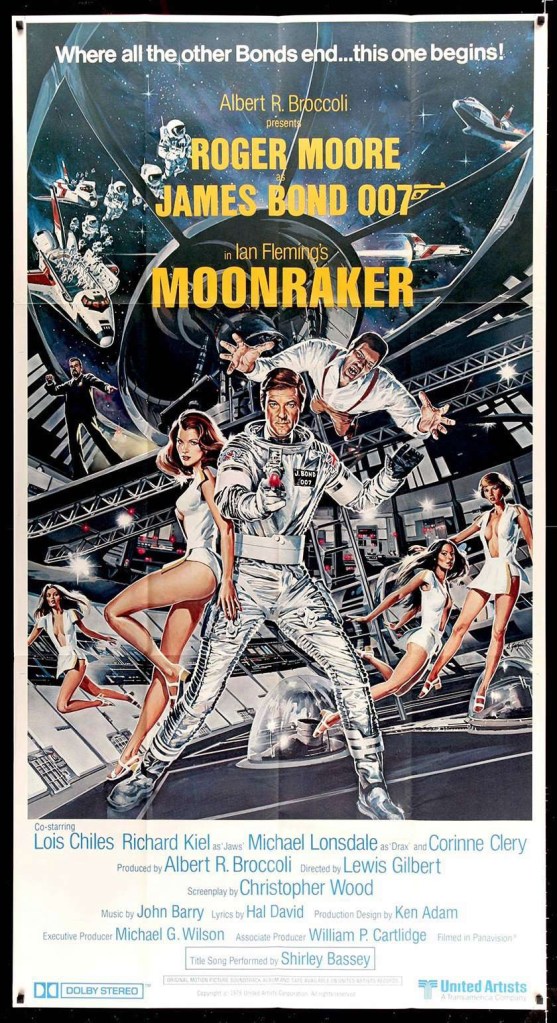
The film, of course, went in a different direction – the late‑70s space‑race fever dragging Bond into orbit – but the book stays rooted in Britain. That groundedness is its strength. Fleming turns the Home Counties and Whitehall into a landscape of unease, where every polite conversation hides a question and every familiar landmark feels one step away from danger.
All that acknowledged, let’s get back to the book.
A City Haunted by the Sky
Moonraker is a gritty 1950s novel set over a handful of days, written in a decade when London still carried the memory of falling rockets. Rationing was still in force. The Blitz was not history; it was last decade. The V‑2s had come without warning, and the next war was expected to arrive the same way. Fleming taps directly into that atmosphere.
London is a city living with the knowledge that the sky has betrayed it once before.
Bond’s investigation begins in the most ordinary way imaginable – a Monday at HQ, a shooting range, paperwork – and then London starts to tilt. A card game in a Mayfair club. A man with no past but enormous influence. A rocket programme wrapped in patriotism and secrecy. Fleming lets the tension seep in through the city’s details: the clubs, the offices, the cliff‑edge jokes about rocket tests, the sense that something is slightly off‑kilter but no one can articulate why.
What makes it compelling is that Bond sees London the way a spy sees it: a city of surfaces, brands, habits, and tells. Even the mention of Cole & Son wallpaper isn’t decoration – it’s an anchor in time, a reminder that this is a real place with real textures. London isn’t a backdrop; it’s evidence.
And as the week tightens, the threat becomes clearer, but never in a way that spoils the story. Fleming’s genius is that he lets the reader feel the pressure without revealing the mechanism until the moment he chooses. The danger is always there, always overhead, always pointed at London – but never fully visible.
What Protects London
What Moonraker ultimately shows is that London’s safety doesn’t come from the grand promises of modern warfare or the comforting idea that technology will always catch the threat in time. In Fleming’s world, those systems are only as strong as the people behind them. London is protected not by machinery, but by vigilance — by someone willing to notice what others overlook, to question what doesn’t feel right, to put in the hard work no one else thinks is necessary.
That’s Bond’s role here. Not the tuxedoed icon, not the globe‑trotting hero, but the man who keeps the city safe through attention, graft, and sheer human determination. London carries on, unaware, because someone bothered to look closely.
In a decade obsessed with rockets and radar, Moonraker reminds us that the thing standing between London and disaster isn’t futuristic weaponry. It’s a person doing their job.
Who This Book Is For
- Readers of classic thrillers — those who enjoy tense, grounded suspense without modern spectacle.
- Fans of Cold‑War fiction — anyone drawn to rationing‑era Britain and early nuclear anxiety.
- Bond readers who prefer the novels — especially those who like Bond doing real investigative work.
- London history enthusiasts — readers interested in how 1950s London thought about threat and defence.
- Readers who appreciate character‑driven heroism — Bond succeeds here through attention and determination, not gadgets.
Verdict Box
High Concept: A Cold‑War threat aimed at Britain, told with grounded tension and 1950s unease.
Execution: Lean, atmospheric, occasionally uneven, but always compelling in its restraint.
Characters: Bond is sharp and workmanlike; Drax is memorable without theatrics.
World‑Building: Evocative post‑war Britain — rationing, V‑2 shadows, and institutional paranoia.
Pace: Tight early on, slow in the middle, then sharply focused as the pressure builds.
Overall: A gritty, contained Bond thriller where the danger is quiet, the stakes are national, and the heroism comes from attention and determination rather than spectacle.
Final Thought
Moonraker strips Bond back to the essentials: no glamour, no gadgets, just a man doing the work. Fleming’s Britain is jittery, post‑war, and braced for the next threat, and the novel makes a simple point – for all the promises of modern defence, it’s still human attention and determination that keep the country safe. Bond protects Britain the old‑fashioned way: by noticing what others miss.
Having re-read the book I truly believe it is time for a grounded Moonraker film, stripped of the space-race spectacle, that would finally do justice to Fleming’s restrained original.
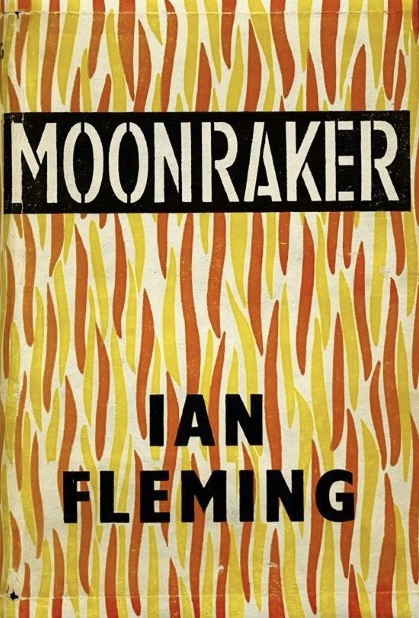
Book cover




Leave a Reply