A plague of giant, flesh‑eating rats tears through London with unstoppable ferocity, marking The Rats as one of the most violent and influential British horror novels of the 1970s. This review examines Herbert’s world‑building, his use of London’s geography, and the novel’s lasting impact on creature horror.
Author: James Herbert
Published: 1974
Cause: Infestation of mutant rats
Chapter One First Sentence: Henry Guilfoyle was slowly drinking himself to death.
TL;DR
Herbert’s first novel launched a trilogy that filled readers with dread as large black rats scamper out of the sewers. This unstoppable swarm of sharp‑toothed fur‑balls sweeps through London with a taste for human flesh. Read between the lines, though – the rats aren’t the ones being judged here.
What’s It About
Herbert paints a vivid picture of life in east London and then tears into it with mutant rats. But it’s not just the city he brings alive — the human prey are fully realised people rather than disposable rat food. The novel has its rough edges, but the strength of the characters and the momentum of the story carry you past them. As the government scrambles to contain the infestation, you quickly start to wonder who is really responsible for the conditions that allowed it to happen.
Review
James Herbert was a master of horror. His twenty‑three novels have sold more than 54 million copies worldwide and been translated into more than thirty languages. But his career began here, with a tale of rodents that tap directly into our oldest urban fears – the kind explored in Animals of the Apocalypse, where certain creatures carry an outsized symbolic weight.
Whether plagues can be factually traced back to rats arriving on ships doesn’t really matter; in our minds, every rat carries disease, and its bite is an immediate threat. Herbert knows exactly how to exploit that instinct.
It’s a skill of a writer to take our darkest, most irrational fears and play on them. However often we’re told the global number of shark attacks, logic dissolves the moment we hear the tune of Jaws and imagine those dead, black eyes and rows of razor‑sharp teeth.
FYI: A report by the Florida Program for Shark Research recorded 12 human fatalities from shark attacks globally in 2025.
Most visitors to the capital have seen a mouse darting along a Tube platform – a tiny ball of fur pushed by tunnel wind. But not everyone has seen a rat. And those who have can tell you exactly where and when.
Despite the often‑quoted (and unconfirmed) myth that London has more rats than people, these creatures prefer to stay out of sight. Herbert drags them out of the dark and into our everyday lives.
Some authors treat victims as disposable plot devices: a body appears, and the story moves on. Not Herbert. He brings you into their lives – their abandoned careers, their attempts to hide in “the quagmire of countless other disillusioned people.” You believe in them. You feel for them.
And only then does he rip them apart. Shadows with claws and teeth scrape across the floor, tearing into your newly discovered friend. Creatures you think you could fight off arrive larger than expected and in greater numbers. Suddenly, the idea of being taken down by ever‑present vermin doesn’t seem far‑fetched.
The first victim repeats the word “rats” in confusion, trying to understand why they’re attacking him. In that moment, the whole concept becomes believable – and Herbert immediately tells you the rats have tasted human blood, and they liked it.
Herbert hints at a hierarchy among the rats, but he never over‑explains. The mere suggestion that something is thinking behind those eyes is enough. He strips away every comforting belief: dogs won’t save you, babies aren’t beyond violence, and innocence offers no protection. The rats recognise none of humanity’s rules.
As regular horror readers know, the real evil is rarely the creature – it’s the people. While the rats satisfy base needs, humans try to twist events to their advantage. It was people who built a system that pushed some down so others could climb.
Chapter seven is the most political chapter. Herbert doesn’t limit his rage to the authorities or the construction industry; it flows all the way down to ordinary Londoners. And he ends his protagonist’s fury with the ultimate condemnation of humankind:
He fell asleep.
Sometimes Herbert’s writing slips into a newspaper‑like bluntness, but the carefully crafted characters always take centre stage. Foskins, the civil servant, is exactly how we picture someone in that job – a man shaped by bureaucracy, not bravery.
As the story fans out across London, it’s easy to imagine dog‑sized rats claiming the city as their own. If you’re not entirely sure horror is for you, this is an excellent book to start with.
Who Is This Book For
- Readers of classic British horror — anyone who prefers atmosphere, dread, and social commentary over jump scares.
- Fans of urban apocalypse fiction — especially those drawn to stories where cities collapse from the inside out.
- London‑centric readers — people who enjoy seeing familiar streets turned hostile, claustrophobic, and predatory.
- Readers who like character‑driven horror — Herbert’s victims feel painfully real before the rats arrive.
- Fans of creature horror with a political edge — readers who appreciate monsters that reveal human failings rather than replace them.
Verdict Box
High Concept:
Mutant rats erupt from London’s underbelly, exposing a city built on neglect, inequality, and quiet desperation.
Execution:
Lean, brutal, occasionally uneven, but always compelling — Herbert balances creature horror with sharp social anger.
Characters:
Victims are vividly drawn, lived‑in, and sympathetic; the civil servant Foskins is a perfect portrait of bureaucratic inertia.
World‑Building:
East London feels authentic and grim – estates, Tube stations, construction sites, and forgotten corners where something could easily be waiting.
Pace:
Fast and vicious in the attacks, slower and more political in the middle, then tightening again as the infestation spreads.
Overall:
A raw, angry slice of London horror where the rats are terrifying, but the real indictment is aimed squarely at the people who let the city rot.
Final Thought
Herbert’s rats aren’t just monsters. They’re a mirror held up to a city that thought it was safe, revealing the fractures beneath the pavements – the forgotten corners, the overlooked people, and the quiet rot that lets nightmares thrive. The swarm is terrifying, but the city’s blindness is what truly bites.
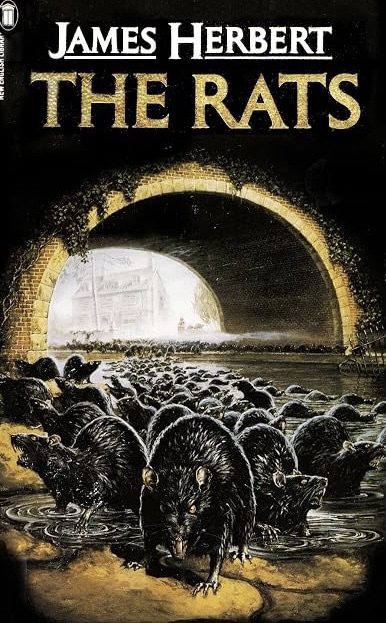
Book Cover



Leave a Reply