London’s Darkest Futures: Five Essential Dystopian Novels
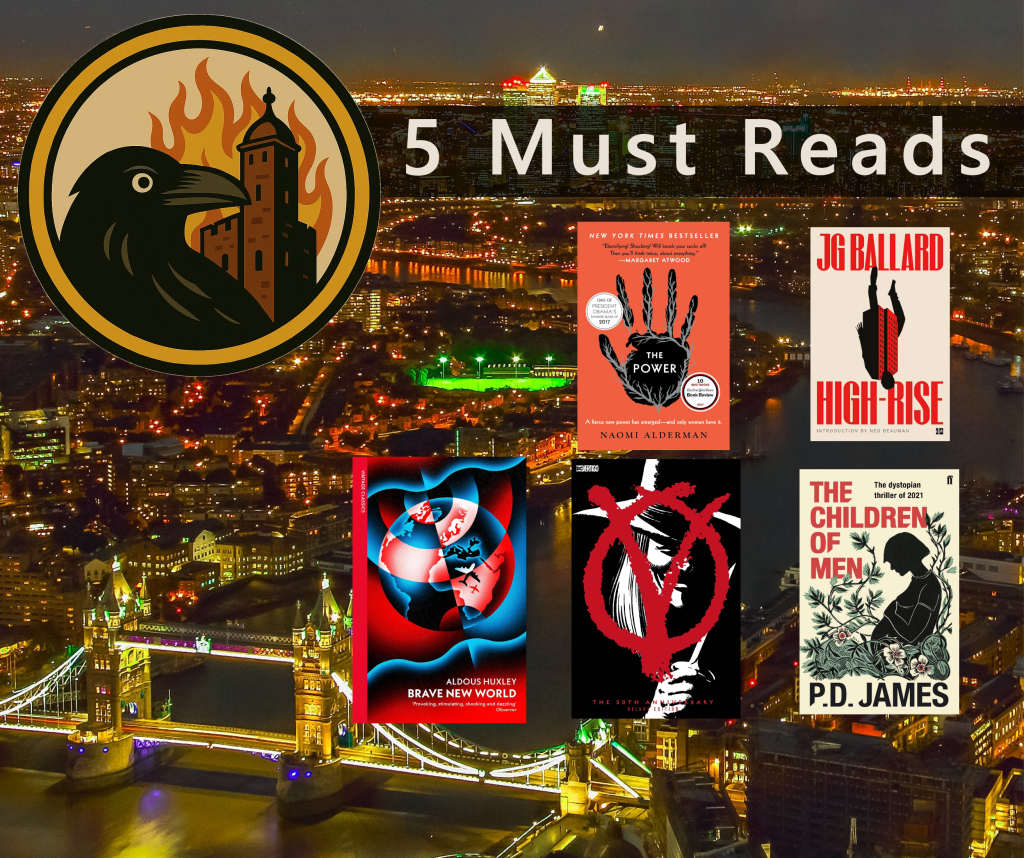
Some dystopias destroy the world overnight. Others hollow it out slowly, replacing freedom, identity and hope with systems that seem impossible to escape. For generations, London has served as a laboratory for imagining the future, and some of fiction’s darkest experiments begin here. These novels explore authoritarian rule, technological power, social collapse and the quiet erosion of what makes us human. Whether through surveillance states, engineered societies or the slow decay of civic life, each presents a different vision of Britain and London transformed. Together, they form a dark literary map of the nation’s fears, anxieties and possible futures.
High-Rise – J.G. Ballard
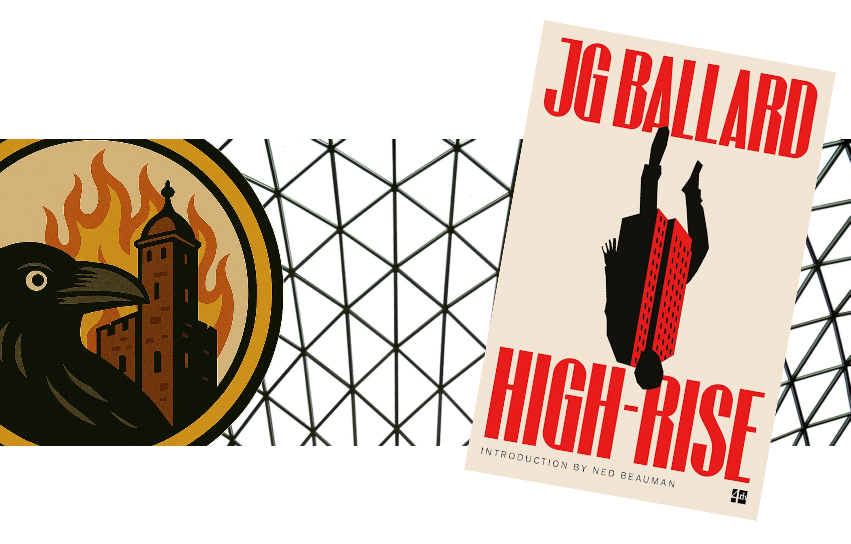
A luxury London tower becomes a vertical war zone.
Ballard’s masterpiece begins with a modern high-rise designed to provide everything its residents could need. Shops, schools, leisure facilities and hundreds of comfortable flats create the illusion of a perfect urban community. Yet as minor inconveniences multiply, the building fractures into rival tribes separated by class, status and territory.
What follows is one of the most unsettling visions of social collapse ever written. The horror comes not from monsters or apocalypse but from ordinary people discovering how quickly civilisation can peel away when isolation and privilege are turned into architectural features. Decades after publication, High-Rise still feels disturbingly modern.

V for Vendetta – Alan Moore & David Lloyd
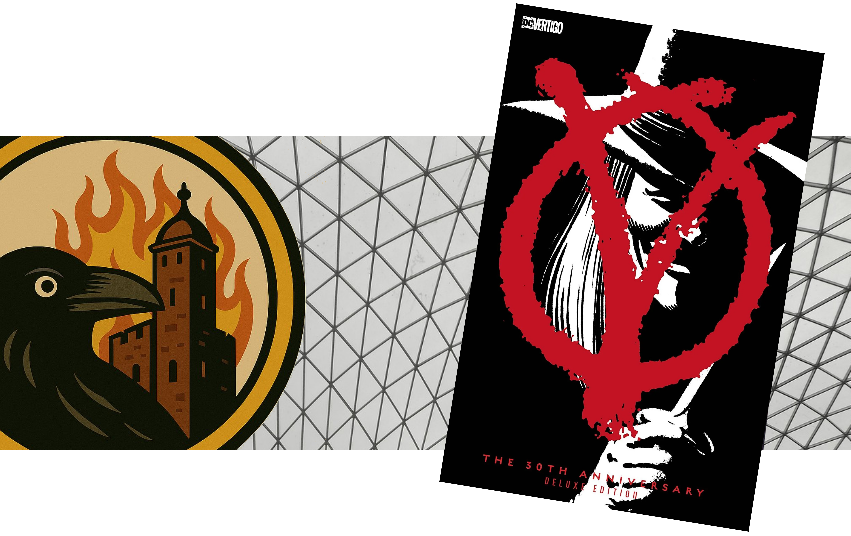
A masked revolutionary wages war against a totalitarian Britain.
In the ruins of a fractured Britain, a fascist government has consolidated power through surveillance, propaganda and fear. Opposing it stands V, a mysterious figure who uses violence, theatre and symbolism to challenge the regime’s grip on society.
Few dystopian stories are more closely tied to Britain’s political imagination. London becomes a stage where ideas about freedom, authority and resistance play out beneath familiar landmarks. The graphic novel remains influential because it asks difficult questions about how democracies fail and what people are willing to do to reclaim them.
The Children of Men – P.D. James
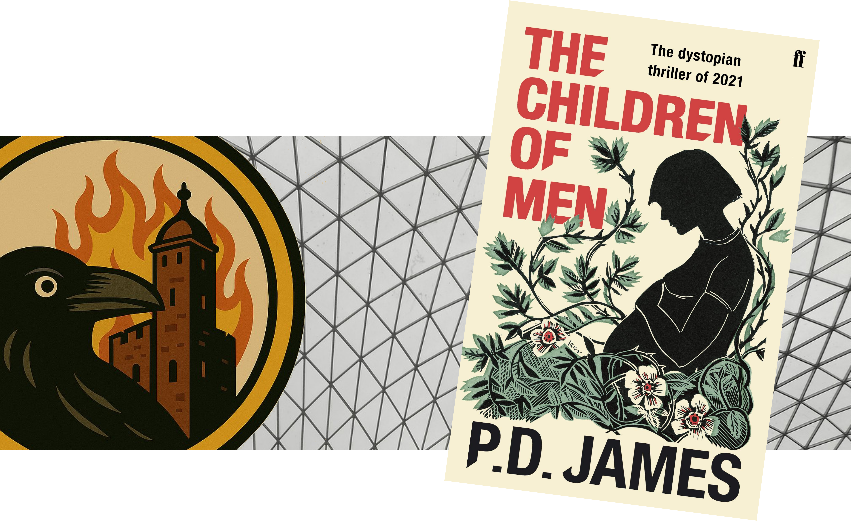
A world without children, a Britain ruled by fear, and a London quietly preparing for its own end – this is dystopia at its most intimate and unsettling.
James imagines a future where humanity has simply stopped. No births, no hope, and a government clinging to control as society slowly erodes. London becomes a city of memorials and empty playgrounds, haunted by the absence of its own future. The Children of Men isn’t about sudden catastrophe — it’s about the long, quiet collapse that follows. It’s one of the most influential British dystopias ever written, exploring grief, power and the terrifying fragility of civilisation.
The Power – Naomi Alderman
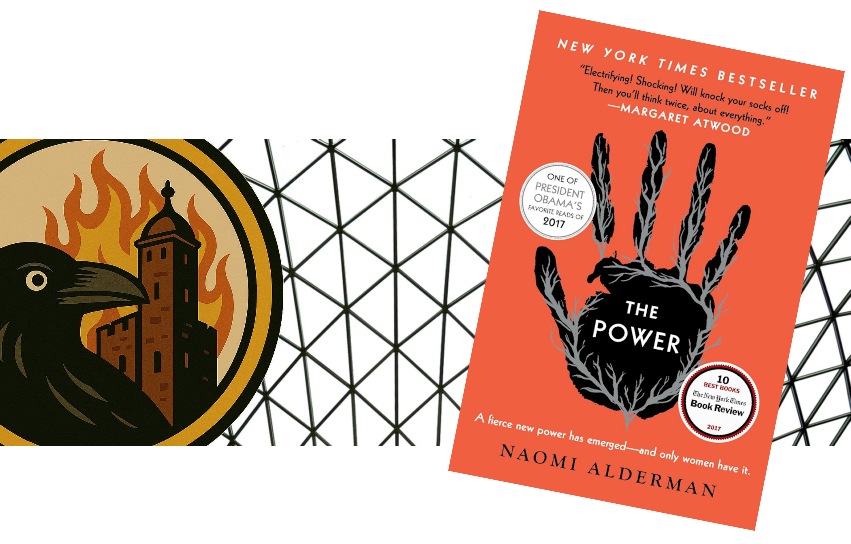
A modern British dystopia where society flips overnight.
Naomi Alderman imagines a world transformed by a single biological shift: women develop the ability to generate electrical power, overturning centuries of social hierarchy in a matter of weeks. What begins as liberation quickly becomes domination, and the global order reshapes itself around fear, control and escalating violence.
The brilliance of The Power lies in how recognisably British its anxieties are. Alderman explores the fragility of institutions, the seduction of authority and the ease with which justice becomes vengeance. It’s a dystopia built not on ruined cities or failed governments, but on the uncomfortable truth that power — in any hands — can corrupt absolutely.
Brave New World – Aldous Huxley
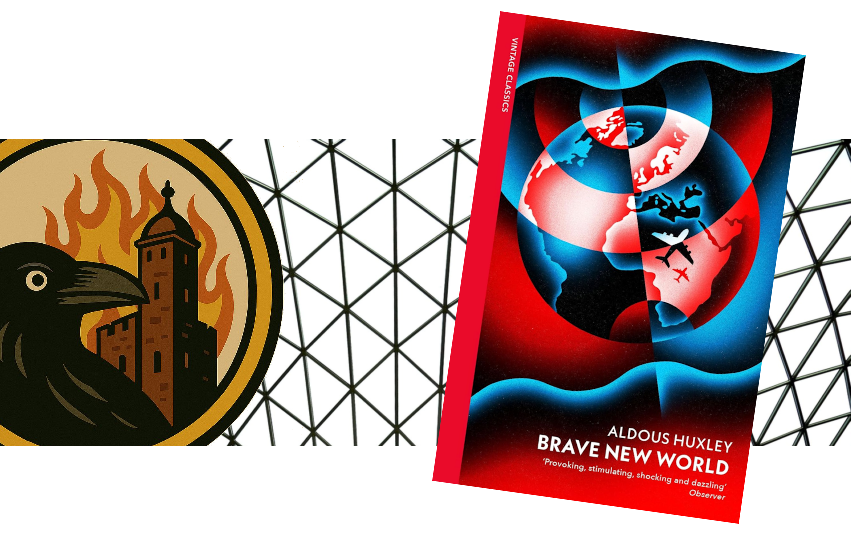
Huxley imagines a future Britain where comfort has replaced conviction, and London stands at the centre of a society engineered for stability at any cost.
Huxley’s society has solved many of humanity’s oldest problems. Citizens are engineered before birth, conditioned throughout life and kept permanently content through entertainment, consumption and carefully managed pleasure.
The brilliance of Brave New World lies in the fact that almost nobody feels oppressed. There are no prison camps or endless wars to sustain the system. Instead, people become participants in their own control. Nearly a century after its publication, Huxley’s warnings about consumer culture, distraction and engineered happiness remain strikingly relevant.
Together, these five books reveal a distinctly British approach to dystopian fiction. Ballard imagines class warfare erupting inside a modern tower block; Moore and Lloyd turn London into a battlefield between freedom and authoritarianism; James explores a Britain without a future; Ishiguro questions the moral cost of technological progress; and Huxley warns of a society that willingly trades liberty for comfort.
Each novel imagines a different route towards decline, yet they share a common concern: what happens when systems become more important than people. Read together, they form one of the most compelling literary journeys through Britain’s darkest possible futures.

How The Books Are Chosen:
These novels are chosen because they represent five distinct forms of dystopia deeply connected to British society and culture. Rather than focusing solely on post-apocalyptic survival, they explore class division, authoritarian government, reproductive collapse, bioethics, and social engineering. Each presents a future that feels plausible enough to be unsettling, making them essential reading for anyone interested in speculative fiction, London literature and the warnings hidden inside great novels.


Leave a Reply